
New York’s Wildlife Ambassadors
Eastern Grey Squirrel
Sciurus carolinensis
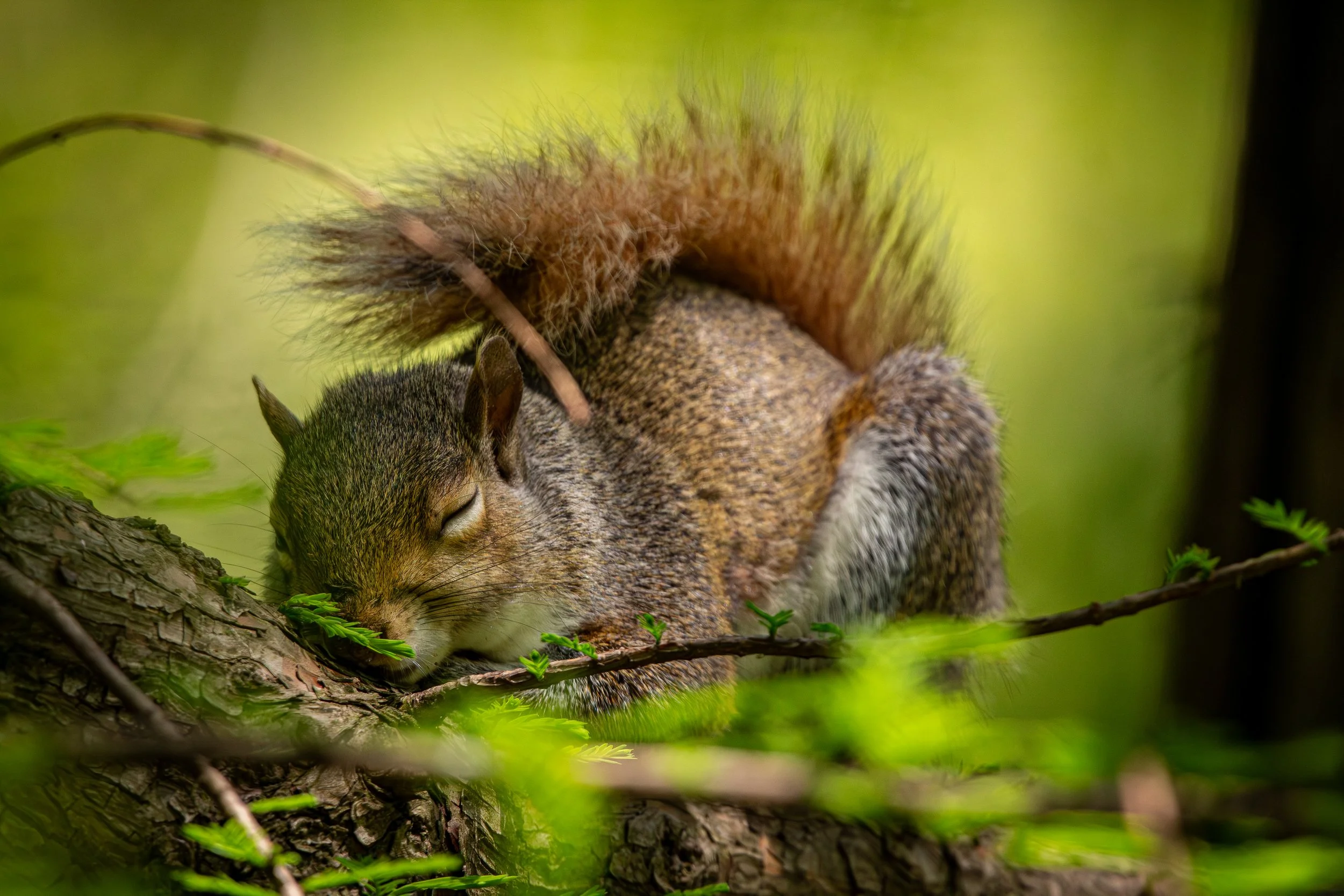
One of the first wild creatures visitors encounter in New York City is also one of its most fascinating: the Eastern Grey Squirrel. Friendly, adorable, and small, the Squirrels of our parks surprise and delight from Battery Park to the farthest reaches of Queens.
But just because they’re common doesn’t mean they don’t have some secrets. From their incredible leaping ability to their importance in growing our forests, the Eastern Grey Squirrel is one of the cornerstones of our urban ecosystems. The next time you see one of these fluffy-tailed gardeners, take a closer look— you might be surprised by what you see!
Central Park -Prospect Park - Van Cortlandt Park -Riverside Park Alley Pond Park- Wolfe’s Pond Park -Forest Park- High Rock Park
Best Places to see them
A Coat of Many Colors
Why are there so many
different shades of Grey?
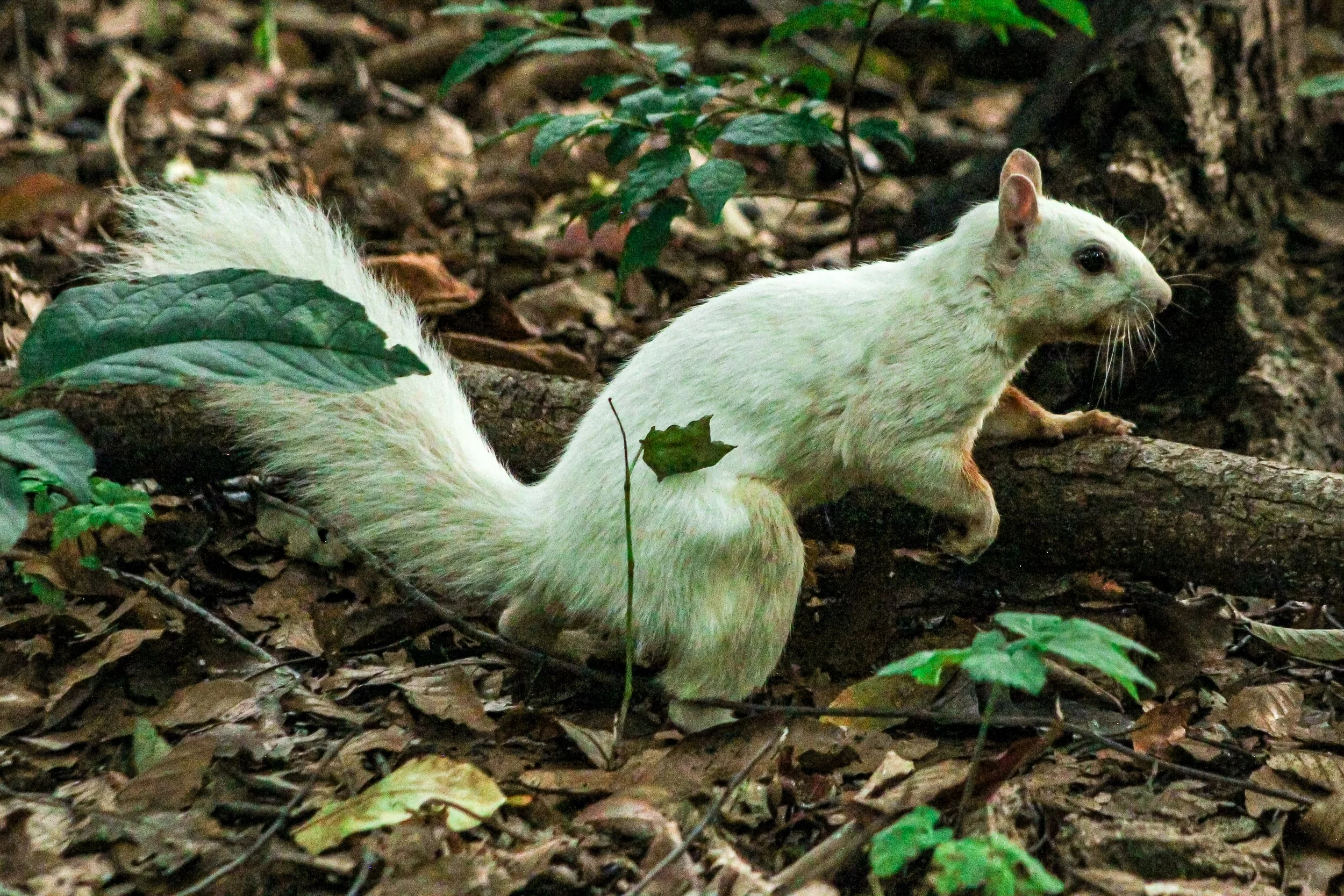
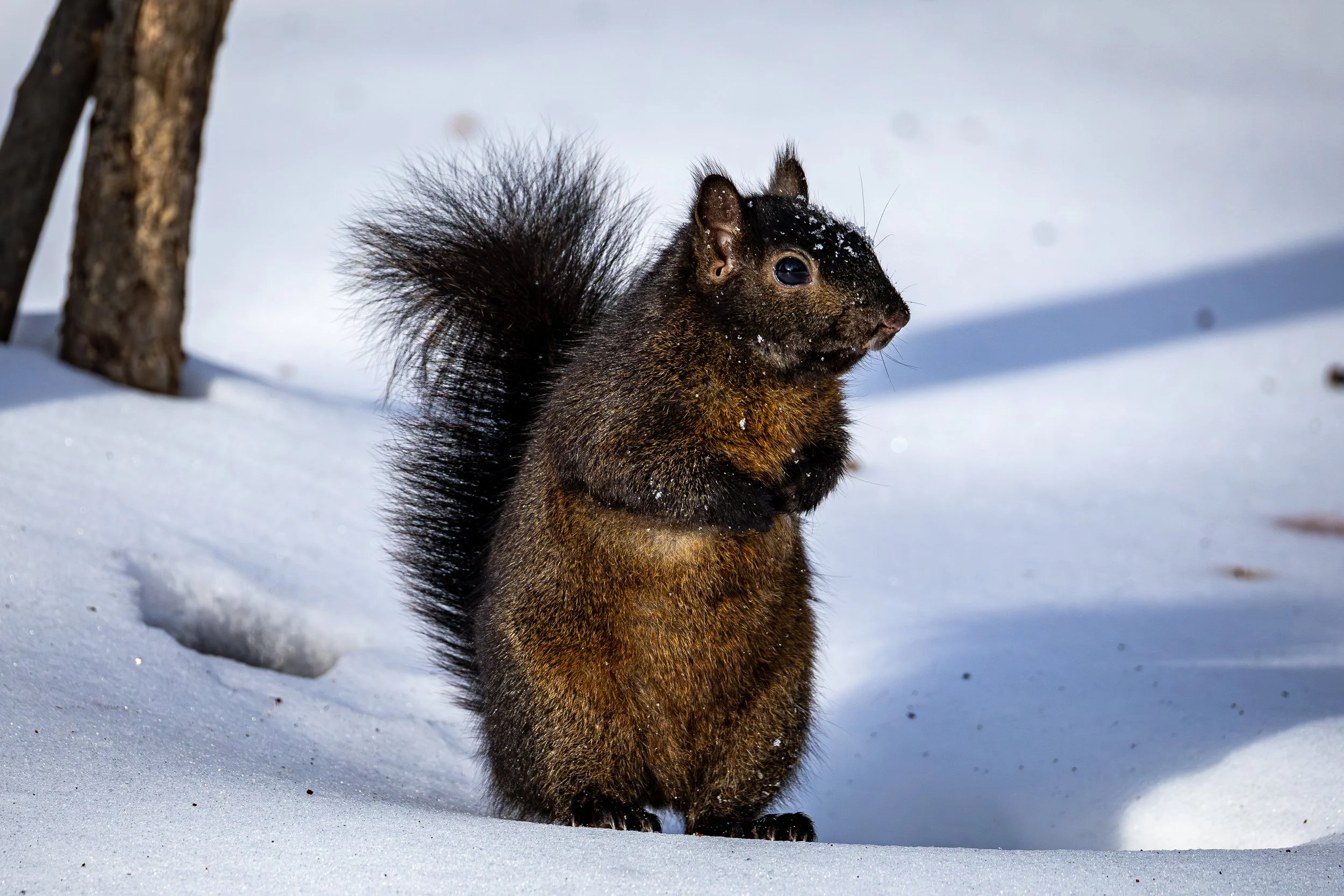
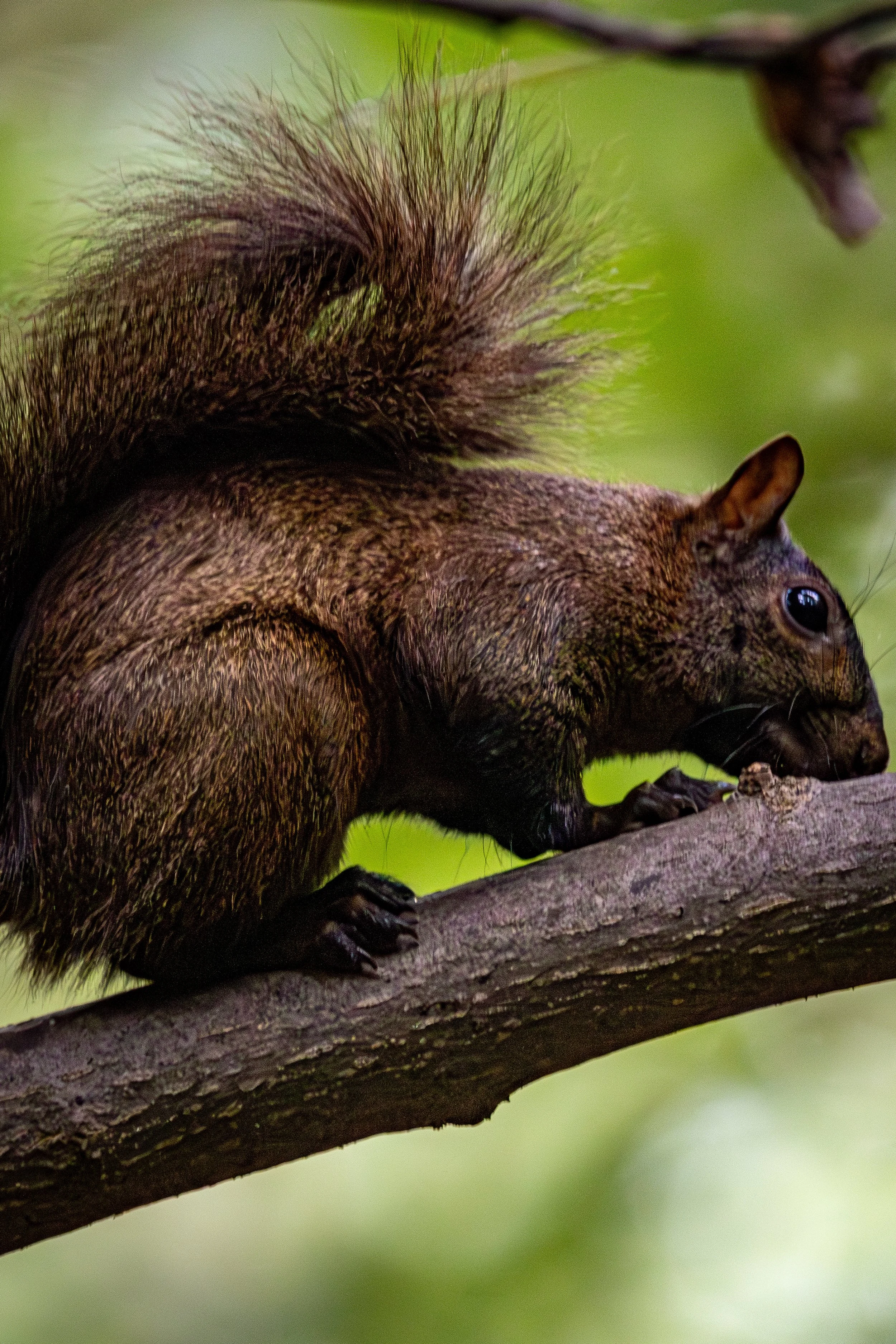
Take a closer look at the fur to the left. How many different colors can you see? White, Grey, Black, Brown— there is quite a bit of variety in this “Grey” squirrel. So what makes some of them brown, some black, and others white as the driven snow?
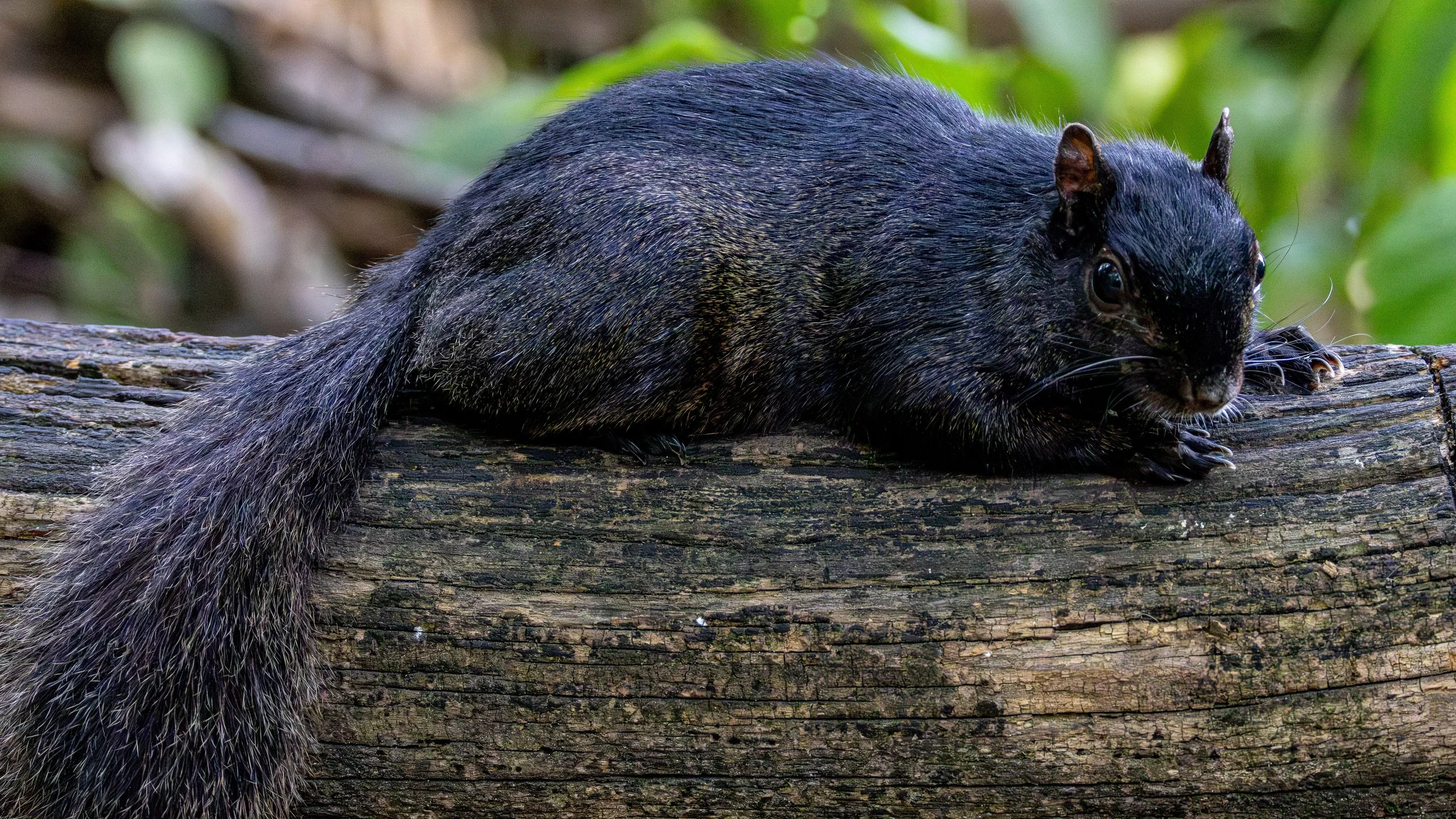
The answer is genetics. Melanism, or the overproduction of darker pigments, stems from a genetic mutation in the MC1R gene. Sometimes, the opposite mutation occurs, causing leucism, or a lack of pigment in the fur that renders the coat white. In even rarer instances, you can find albinism— a total lack of pigment in the body.
New York’s unique urban landscapes can actually make these abnormalities an advantage. Darker fur makes it harder to spot you in the shadows in a well lit park. White fur can help keep you cool in the urban heat and hide in the snow. While the reasons for these fur changes are still debated, what’s undeniable is how beautiful our squirrels are!
Size: 9-12 inches (23-33cm) long, around the size of a sheet of paper
Weight: 14-21 oz (400-600g) or about the weight of a full water bottle
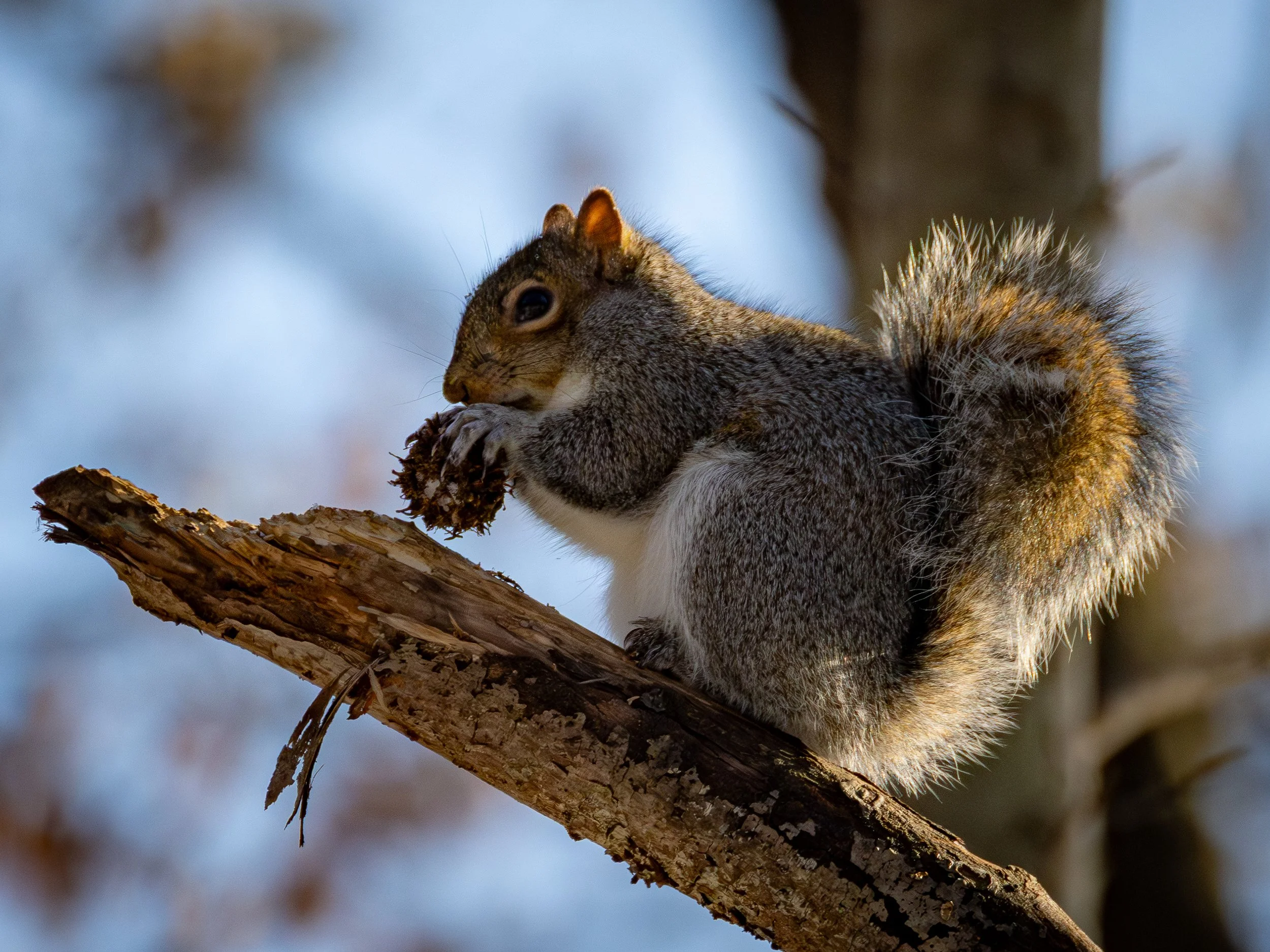
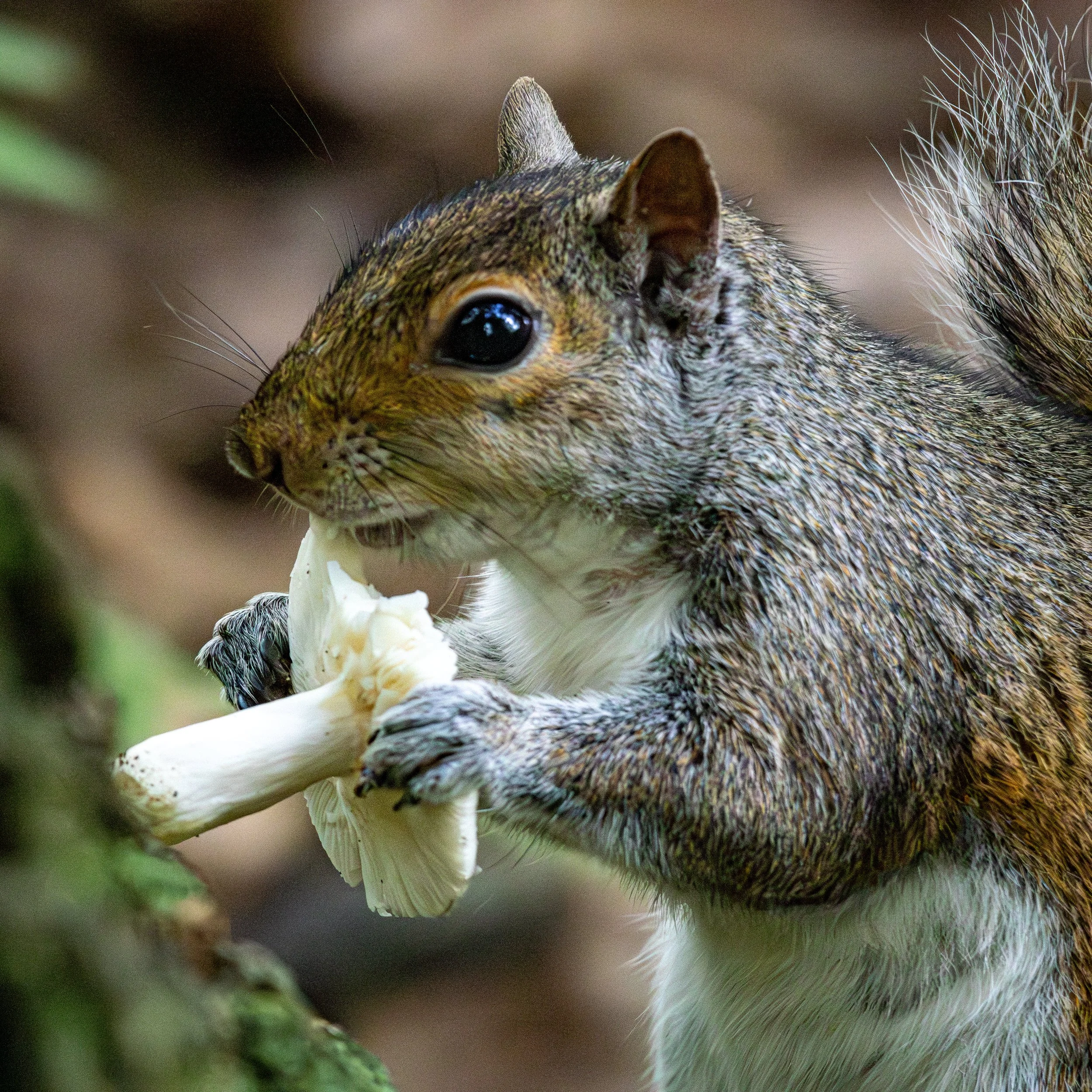
Diet: Opportunistic omnivores, squirrels predominantly eat tree nuts and plant seeds, but will also eat mushrooms, insects, and even small birds!
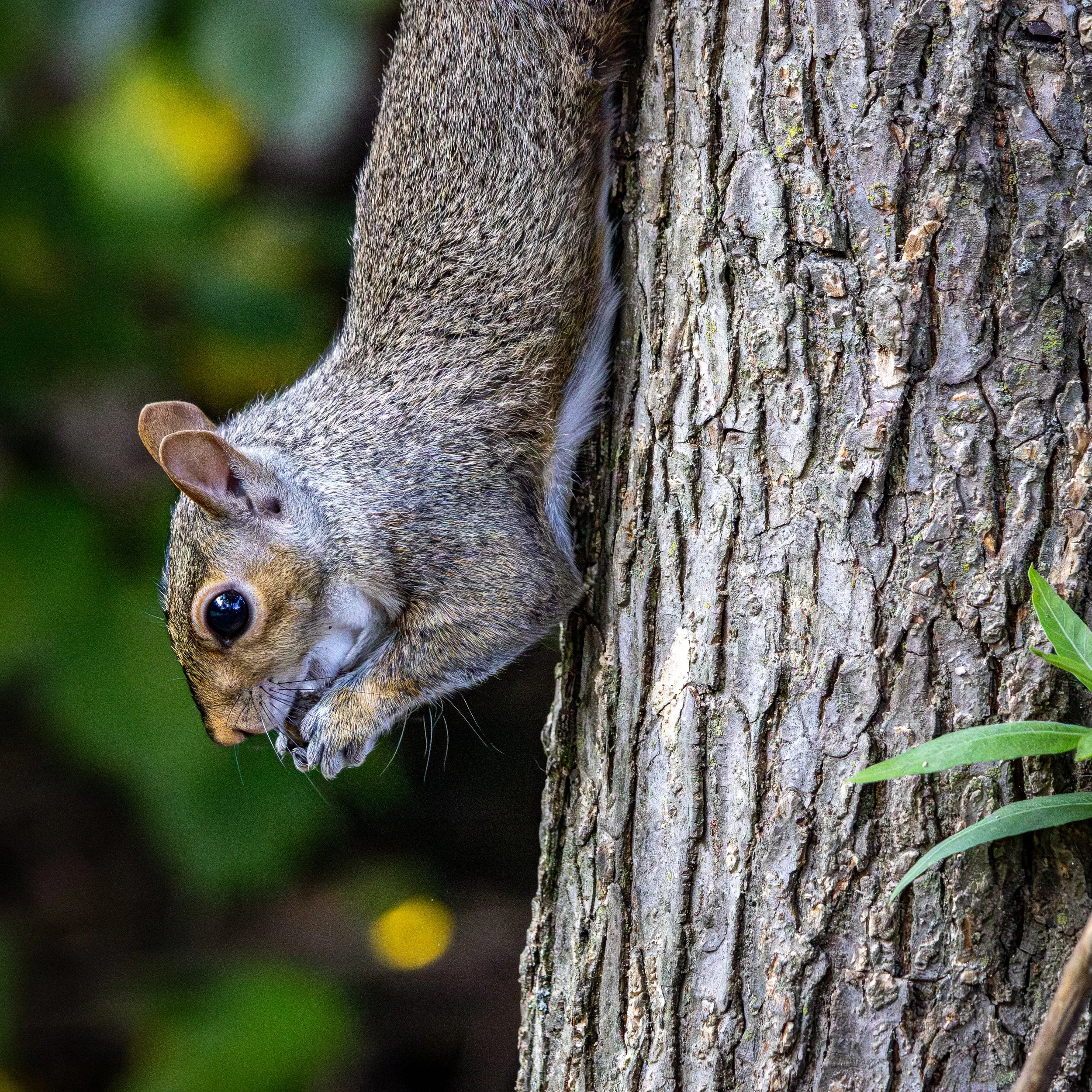
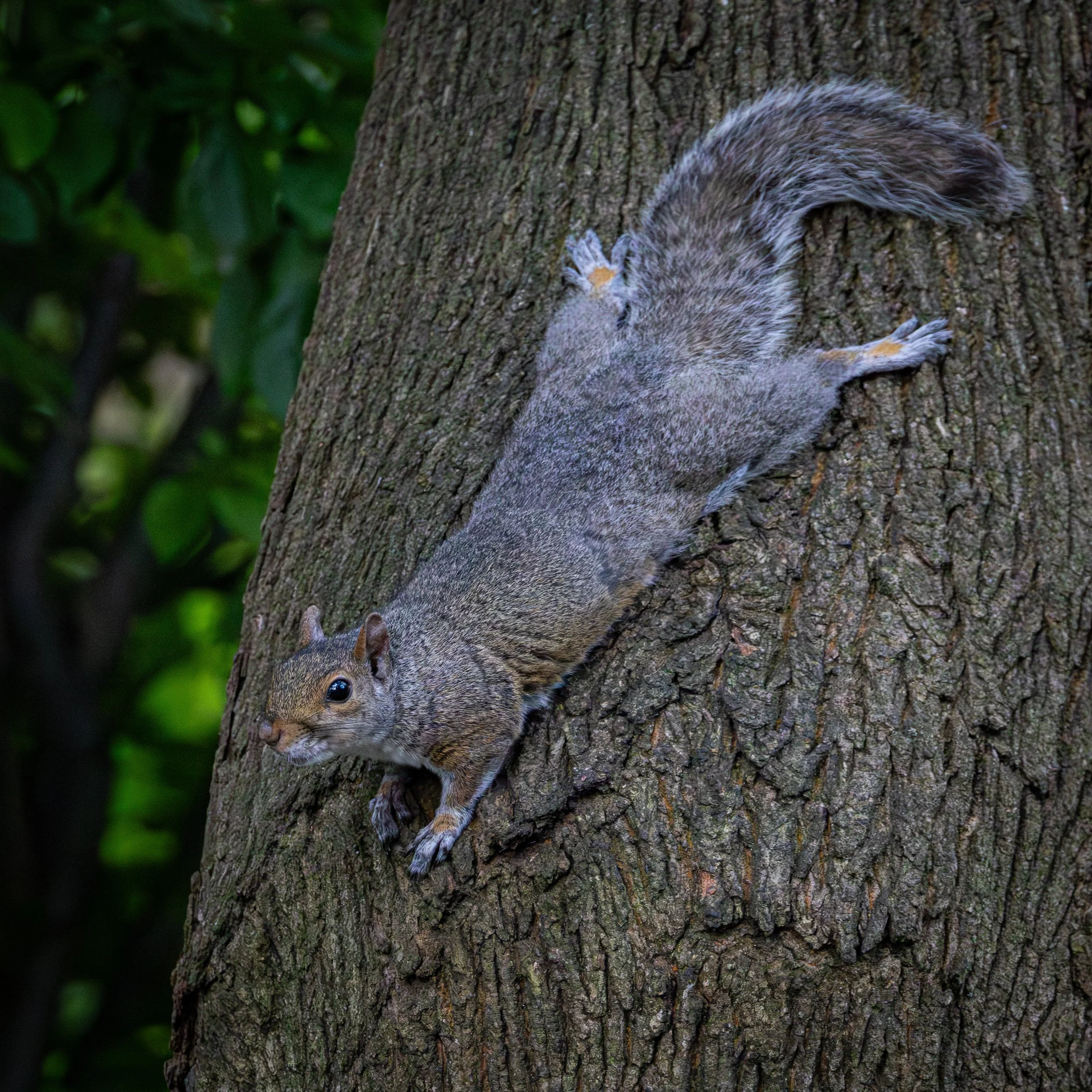
Mobility: Squirrels possess double-jointed ankles that allow them to descend trees head first
Jumping: Squirrels can leap up to 5 feet from straight from the ground up, but can cover distances of nearly 16 feet when leaping down from tree branches!
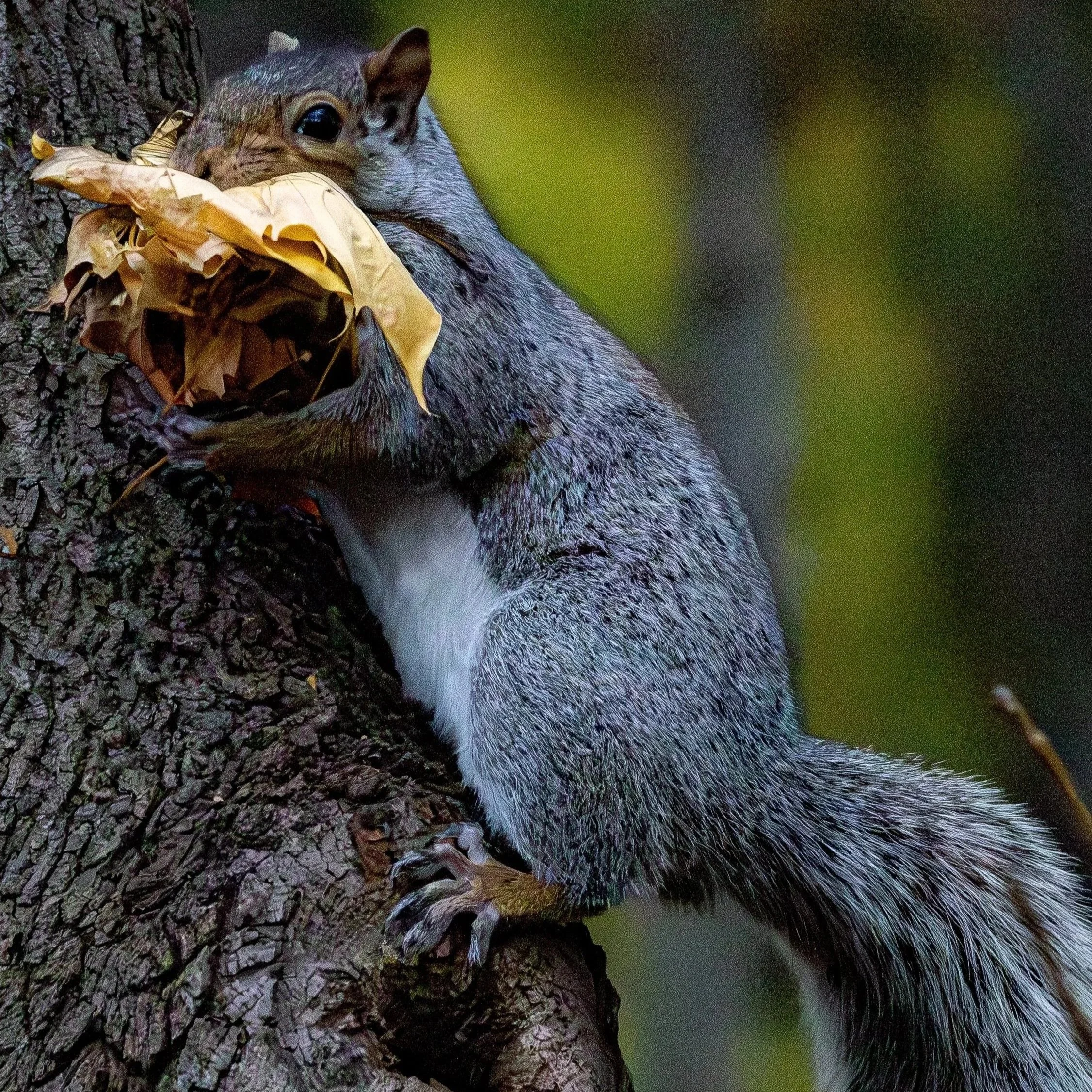
Memory: In preparation for winter, squirrels cache extra food in organized locations, often sorting nuts by type to help build a “memory map” of where they’ve stored it! When they know they’re being watched, they will engage in ‘false caching’, pretending to bury something to throw off potential thieves.
Reproduction: Squirrels have two breeding seasons a year, in early Winter and again in peak Summer. This is when you’re likely to see them engages in chases and combative behavior!
Fast Facts
Watch Our Episode!
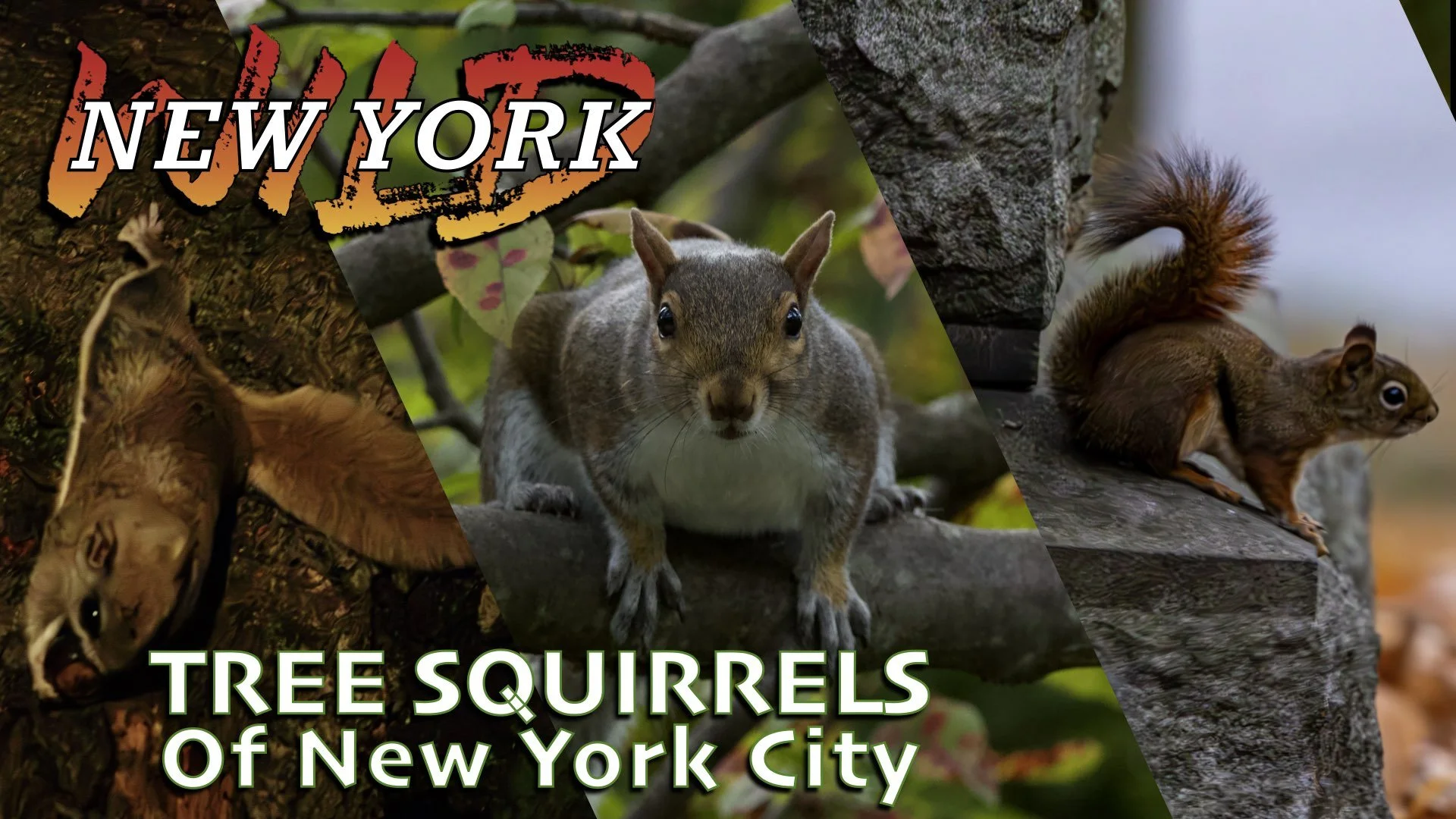
Tape the image below to learn more about NYC Squirrels!